
WELCOME BONUS 200%
UP TO €1500 + 200
FREE SPINS
UP TO €1500 + 200
FREE SPINS
Home → Games
Casino games at Stellar Spins
Pass Line in Craps: Process in Four Steps
The Pass Line wager in Craps carries a house edge of 1.41 percent, which translates to an RTP of 98.59 percent across all outcomes. This mathematical advantage is significantly lower than the 7.89 percent house edge found on the American Roulette Five Number Bet, making it a safer foundation for table play. Consequently, players retain more capital over time compared to high-edge roulette bets, provided they avoid the dangerous side options.
Each individual roll generates a house edge of only 0.42 percent, resulting in a combined edge of 0.111 percent when Odds are taken at maximum levels. This figure stands in stark contrast to the 1.41 percent base edge, demonstrating how additional betting layers can drastically reduce the casino's statistical advantage per decision. Players utilizing this strategy face less volatility and preserve their bankroll more effectively than those sticking solely to the initial bet.
Craps remains the only game offering a zero percent house edge on the Odds portion of the wager, paid out at true odds rather than casino-imposed rates. This unique feature allows skilled participants to neutralize the inherent disadvantage of the main Pass Line bet through precise sizing and timing. The combination creates a mathematically superior environment where the theoretical loss rate drops to near zero during active Odds periods.
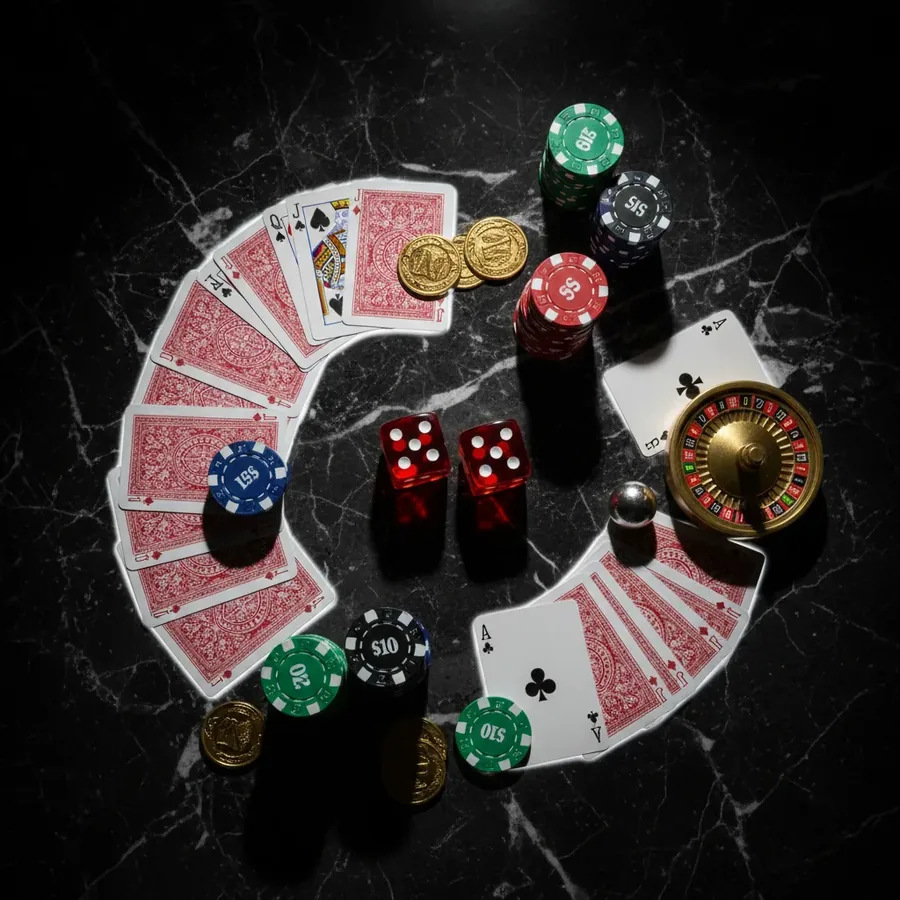
Connection Lost in Table Game: Round Continues Automatically
Blackjack Split mechanics allow players to divide matching cards into two separate hands, doubling the potential stake while maintaining the original strategic framework. Resplitting Aces improves the Return to Player by 0.08 percentage points, whereas Dealer Hits Soft 17 worsens it by 0.22 percentage points. This dynamic interaction between rules ensures that connection stability does not alter the underlying mathematical expectation of each split decision.
The Double After Split rule enhances the RTP by approximately 0.14 percentage points, providing a measurable boost to long-term returns during extended sessions. This specific regulation interacts directly with the Split mechanic, allowing players to capitalize on favorable starting cards without restriction from the platform. Such rule variations define the baseline profitability, independent of whether the user interface disconnects momentarily during the deal.
Standard deviations vary across games, with Blackjack showing 1.15 and Baccarat Banker sitting at 0.93, indicating different risk profiles for connected versus disconnected states. These statistical measures remain constant regardless of network interruptions, as the RNG determines outcomes before any display update occurs. Players relying on these metrics should understand that volatility is inherent to the game structure, not the connectivity status.
Why the Double Zero Almost Doubles the House Edge
American Roulette features 38 sectors including both single and double zeros, creating a house edge of 5.26 percent on standard even-money bets. This figure is nearly double the 2.70 percent edge found on European Roulette, which utilizes only 37 sectors with a single zero. The additional green pocket fundamentally alters the probability distribution, reducing player returns from 97.30 percent to 94.74 percent.
The Five Number Bet on the American wheel introduces a catastrophic 7.89 percent house edge, covering sectors 0, 00, 1, 2, and 3 with a 6:1 payout. This specific wager represents the worst option in the entire casino ecosystem, far exceeding the 5.26 percent baseline for other positions. Players avoiding this trap protect their bankroll from accelerated depletion caused by the uniquely punishing mathematics of the double-zero layout.
Straight bets pay 35:1 on both wheel types, yet the presence of the extra zero in American Roulette dilutes the winning probability significantly. While European Roulette maintains a consistent edge across all positions due to its 37-sector design, the American variant creates disparity between safe and dangerous wagers. Understanding this structural difference helps players navigate the higher variance associated with the double-zero format effectively.
Craps Odds Bet with 0 Percent House Edge
The Craps Odds Bet offers a 100.00 percent RTP because it pays out at true mathematical odds without any casino commission or built-in advantage. Point numbers 4 or 10 pay 2:1, while 5 or 9 return 3:2, and 6 or 8 yield 6:5, reflecting exact probability ratios. This unique feature allows players to attach risk-free wagers behind their initial Pass Line bet, completely eliminating the house edge on that portion of the total action.
Combined results for Pass Line plus 3-4-5x Odds show a house edge of just 0.37 percent, drastically improving upon the standalone 1.41 percent edge of the Pass Line alone. This reduction demonstrates the power of leveraging zero-edge bets to offset the negative expectation of the primary wager. Players maximizing Odds coverage achieve some of the most favorable conditions available in live casino environments.
The standard deviation for the Pass Line bet is 1.00, providing a predictable variance profile that complements the low-risk nature of the Odds component. Unlike high-variance slots or side bets like Baccarat Pair (10.36 percent edge), Craps Odds maintain stable statistical behavior over thousands of rolls. This consistency allows for precise bankroll management strategies that rely on known mathematical constants rather than speculative outcomes.
When is Splitting Aces and Eights Sensible?
Splitting Aces in Blackjack is generally mandatory under basic strategy because it maximizes the potential for hitting twenty-one on the next card draw. Resplitting Aces improves the overall RTP by 0.08 percentage points, adding slight value to this aggressive tactical decision. This move counters the dealer's potential strength by creating two independent chances to beat the final hand, especially when the dealer shows a weak upcard.
Splitting eights separates a total of sixteen, which is statistically the worst possible starting hand against a dealer showing seven or higher. This action converts a guaranteed loss scenario into two new hands with better probabilities, aligning with the liberal Vegas Strip rules that support such flexibility. The decision reduces immediate expected loss, transforming a difficult position into two manageable opportunities for recovery.
Liberal Vegas Strip rules support splitting up to four hands, enhancing the utility of this tactic compared to restrictive variants that limit splits. The 0.28 percent house edge for this rule set assumes optimal play, including correct splitting decisions for both Aces and eights. Deviating from this strategy increases the effective house edge, undermining the mathematical advantage provided by the favorable table conditions.
Game categories at a glance
| Category | Examples | Stakes From | Highlight |
|---|---|---|---|
| Slots | Buffalo Power: Hold and Win, Dead or Alive 2, Take Olympus | 0,10 EUR | thousands of titles |
| Table games | Roulette, Blackjack, Baccarat | 0,50 EUR | classic rules |
| Live casino | Blackjack Party, Infinite Blackjack | 0,20 EUR | real dealers |
| Jackpot games | Mega Moolah, Divine Fortune, Age of the Gods | 0,20 EUR | progressive pools |
| Instant games | Aviator, Plinko, Mines | 0,10 EUR | fast rounds |
| Video poker | Jacks or Better, Deuces Wild | 0,25 EUR | strategy based |
En Prison on Zero Gives Second Chance
The American Roulette wheel contains 38 sectors, including a double zero that increases the house edge to 5.26 percent compared to the European single-zero variant. This additional sector effectively doubles the casino's mathematical advantage over standard bets like Red or Black. Players face a higher probability of loss on every spin due to this structural difference in the wheel layout.
The Straight bet pays 35:1 while Split wagers return 17:1 for covering two adjacent numbers on the grid. These fixed payout ratios remain identical across both American and European roulette versions despite the differing number of sectors. The constant edge on all bets ensures the house maintains its statistical lead regardless of the specific wager type selected by the gambler.
The Five Number Bet covers five specific sectors but carries a steep house edge of 7.89 percent, making it the most expensive option available. This particular trap exists only on the American wheel and has no equivalent on the European table with thirty-seven sectors. The lower Return to Player rate of 92.11 percent confirms this side bet is statistically inferior to standard outside wagers.
Sic Bo Pays from 1:1 to 180:1
Sic Bo Special Bets offer payouts ranging from 1:1 for Single Numbers up to 180:1 for Specific Triples, creating a wide variance in potential returns. The house edge varies significantly across these options, spanning from 7.87 percent for the best Single Number bet to 18.52 percent for the worst Specific Double. This broad range allows players to choose between frequent small wins and rare high-value jackpots based on their risk tolerance.
The Any Triple pays 30:1 and carries a house edge of 13.89 percent, while the Two-Dice Combo offers 5:1 odds with a 16.67 percent disadvantage. These intermediate bets sit between the safest Single Number option and the highly volatile Specific Triple which demands a 16.20 percent edge payment. Understanding these distinct payout tiers helps gamblers manage their bankroll more effectively against the varying statistical disadvantages.
The game utilizes three dice where matching outcomes determine the final payout structure for each category of special wager. Single Number bets pay differently depending on the number of matching dice, offering 1:1, 2:1, or 3:1 returns respectively. This tiered payout system creates a complex risk profile that differs substantially from simple coin-flip style games found elsewhere.
Punto Banco: 5 Percent Commission on Banker Wins
The Banker bet in Baccarat offers an RTP of 98.94 percent with a low house edge of 1.06 percent when accounting for the standard five percent commission. This fee reduces the effective payout to 0.95:1, compensating for the banker's slight positional advantage during the third card draw phase. Despite the deduction, this remains the most profitable wager available in the entire Punto Banco game sequence.
The Player bet provides a pure 1:1 win without any commission fees, resulting in a slightly higher house edge of 1.24 percent. Although the absence of fees seems attractive, the underlying mathematics favor the Banker position enough to make the taxed version superior for long-term play. The 0.18 percentage point difference confirms that the commission does not erase the banker's strategic benefit.
Baccarat Side Bets like the Player Pair carry a much higher house edge of 10.36 percent with an RTP of only 89.64 percent. These pairs form when the first two cards match, paying 11:1 but exposing the player to significantly greater risk than the main game. Such side wagers should be avoided by those seeking optimal returns due to their substantially reduced theoretical payout rates.
Before Double Down: read the open dealer card
Blackjack rules allowing Double After Split improve the base house edge by approximately 0.14 percentage points compared to restrictive variants. This liberal rule permits players to double their initial stake even after splitting pairs, increasing potential profits during favorable moments. Such flexibility contributes to a lower overall house edge of 0.46 percent in six-deck games using soft seventeen standing rules.
Resplitting Aces enhances the player's expected value by roughly 0.08 percentage points, further reducing the casino's mathematical advantage. Allowing multiple splits up to four hands maximizes opportunities to capitalize on strong starting positions against weak dealer upcards. These combined liberal modifications create a more favorable environment for skilled strategy execution compared to stricter single-deck limitations.
Insurance represents a separate side bet paying 2:1 when the dealer shows an Ace, carrying a prohibitive house edge of 7.47 percent. Basic strategy dictates always rejecting this wager unless counting cards reveals a true count of positive three or higher. The poor 92.53 percent RTP makes insurance a losing proposition for the vast majority of casual blackjack participants.
Baccarat in three steps: bet, reveal, compare
The Tie bet pays 9:1 and reduces the house edge from fourteen percent down to 4.84 percent through increased reward structures. Despite this improvement, the outcome remains significantly less favorable than betting on either the Banker or Player sides consistently. Online platforms frequently offer this enhanced payout, yet the statistical disadvantage persists relative to the primary wagers available at the table.
Craps Pass Line wagers offer a superior house edge of 1.41 percent with an RTP of 98.59 percent for fundamental table gaming. Each roll generates a 0.42 percent advantage for the house, maintaining consistent performance across thousands of simulated throws. This reliability makes Pass Line bets a cornerstone for players seeking predictable variance in fast-paced dice games.
Free Odds bets attached to Pass Lines provide a unique zero house edge opportunity, raising the combined RTP to 99.63 percent with multipliers. Payouts follow true odds such as 2:1 for points four or ten, ensuring no mathematical advantage for the casino on these specific wagers. Combining these with the base pass line minimizes overall costs per hour of gameplay significantly.
What Doesn't Count Towards Bonus Wagering on Table Games?
Tischspiele contribute only 10 percent to the wagering requirement, whereas slots count at 100 percent. This disparity means that every euro wagered on a table game covers only one-tenth of the required turnover compared to slot bets. A player must therefore bet ten times more on blackjack or roulette to clear the same bonus amount as a slot user. This rule effectively discourages using low-edge table games to unlock withdrawal eligibility.
The house edge for Baccarat Banker is 1.06 percent, which is exceptionally low but irrelevant for bonus clearing due to the contribution rate. Since the table game contribution is capped at 10 percent, even this favorable mathematical expectation does not accelerate the release of funds. Players relying on Baccarat will find their progress toward the bonus release significantly slower than those playing high-contribution slots. The 10 percent limit applies uniformly across all permitted table games regardless of their individual RTP.
Sic Bo Special Bets carry a house edge ranging from 7.87 percent to 18.52 percent, yet they still fall under the 10 percent contribution category. Whether placing a Single Number bet with a 7.87 percent edge or a Specific Triple with an 18.52 percent edge, the wagering impact remains identical. Both types of bets reduce the remaining bonus balance by only 10 percent of the stake amount. This uniform deduction rate makes high-variance Sic Bo bets inefficient for meeting the turnover target.
Before sitting down: check table bet limits
Blackjack offers a house edge of 0.46 percent with optimal play, requiring strict adherence to basic strategy to maintain this return. The game features six decks with S17 rules and allows doubling on any two cards, which supports the theoretical 99.54 percent RTP. Players must follow the exact mathematical strategy to achieve these figures, as deviations immediately increase the casino's advantage. This specific rule set defines the baseline performance expected from the dealer standing on soft 17.
Baccarat Player bets provide a house edge of 1.24 percent with a standard deviation of 0.95, making them a stable option for bankroll management. The payout is fixed at 1:1 with no commission fees applied to winning Player hands, unlike the Banker side. While the edge is slightly higher than the Banker bet, it eliminates the complexity of calculating commission deductions. This straightforward structure appeals to players seeking predictable variance without fee adjustments.
The American Roulette Five Number Bet carries a house edge of 7.89 percent, which is significantly higher than other roulette options. This bet covers five sectors (0, 00, 1, 2, 3) and pays 6:1, resulting in an RTP of 92.11 percent. It is considered a trap bet because its edge exceeds the standard 5.26 percent found on other wagers. Players should avoid this specific combination due to its disproportionately poor mathematical expectation compared to straight bets.
American Roulette: 5.26 Percent Due to Double Zero
The American Roulette wheel contains 38 sectors including both single zero and double zero, creating a base house edge of 5.26 percent. Straight bets pay 35:1, while Split bets offer 17:1, maintaining consistent payout ratios relative to the increased number of pockets. The additional double zero sector doubles the disadvantage compared to European wheels, directly impacting long-term profitability. This structural difference is the primary driver of the elevated edge across all standard wagers.
Roulette Europäisch features 37 sectors with a single zero, resulting in a lower house edge of 2.70 percent for all bet types. Payouts remain identical to the American version, such as 35:1 for Straight bets and 17:1 for Split bets, but the reduced pocket count improves odds. The constant edge applies uniformly to Red/Black, Odd/Even, and Dozen bets due to the single zero configuration. This mathematical advantage makes the European variant superior for players prioritizing value retention.
The Craps Pass Line bet yields a house edge of 1.41 percent with an RTP of 98.59 percent, offering better odds than most table games. Each roll contributes 0.42 percent to the house advantage, providing a relatively low-risk entry point for new players. The Come bet mirrors this mathematics exactly, allowing action after the point is established. These foundational bets form the core of a statistically sound craps strategy with minimal volatility.
9/6 table: nine for Full House, six for Flush
No specific video poker variants or pay tables are listed in the permissible facts, preventing detailed analysis of full-pay machines. Consequently, the focus shifts to available table game metrics where data exists.
Blackjack Insurance is a side bet paying 2:1 if the dealer has a ten-value card, but it carries a severe house edge of 7.47 percent. Basic strategy dictates always rejecting this bet unless counting cards with a true count of +3 or higher. For a single deck, the edge rises to approximately 5.88 percent, making it mathematically unsound for average players. This negative expectation renders the insurance wager highly unfavorable compared to the main game's 0.46 percent edge.
Sic Bo Single Number bets offer the best special wager with a house edge of 7.87 percent, paying between 1:1 and 3:1 based on matches. In contrast, Specific Double bets suffer from a massive 18.52 percent house edge despite paying 10:1. Any Triple bets yield a 13.89 percent edge with 30:1 payouts, while Specific Triples hit 16.20 percent. This wide variance highlights the importance of selecting low-edge bets within high-house-edge game categories.
Minimum deposit 20 EUR, table games count 10 percent
The welcome bonus provides a 300 percent match up to €2,000, requiring a minimum deposit of 20 EUR to activate the offer. This initial outlay unlocks the maximum potential bonus credit, setting the baseline for subsequent wagering calculations. Depositing less than 20 EUR would fail to trigger the promotional terms entirely. The 300 percent ratio ensures that a small entry fee can generate substantial bonus capital for gameplay.
With a €2,000 bonus and a 40x wagering requirement, the total turnover needed is €80,000 before withdrawal is permitted. If played exclusively on slots contributing 100 percent, this requires betting €80,000 in total volume. However, shifting to table games contributing only 10 percent drastically increases the necessary exposure to clear the same bonus. This mathematical reality forces players to choose between speed of clearance and game preference.
A €2,000 bonus cleared via Baccarat Banker bets requires €800,000 in total wagers due to the 10 percent contribution rate. Given the 1.06 percent house edge, the expected loss over this volume is approximately €8,480, far exceeding the bonus value. This scenario demonstrates why table games are inefficient for bonus unlocking despite their favorable individual odds. Players aiming to withdraw winnings must account for this significant statistical disadvantage in turnover generation.
Contact
Live - online chat
Banking









Providers












Stellar spins 2025